


Mahakaleshwar Jyotirlinga, Ujjain
Mahakaleshwar Jyotirlinga, Ujjain (श्री महाकालेश्वर ज्योतिर्लिंग) — Jyotirlinga (the only south-facing one)
- Madhya Pradesh
- PlaceUjjain City, Ujjain District, Madhya Pradesh
Traveller Note: Online/offline booking for the Bhasma Aarti is limited; during Shravan and holidays, book several days in advance.
Scriptural and Historical Significance
- Puranic Reference: According to the Shiva Purana (Kotirudra Samhita), to protect the Brahmin Vedapriya of Avantika and his sons, Shiva destroyed the asura named Dushana and abides here in the form of "Mahakala". The Avanti Khand of the Skanda Purana describes Mahakalavana in detail.
- Significance of Avantika: Ujjain (Avantika) is one of the Saptapuri (seven sacred cities) and was regarded as the centre of ancient Indian time-reckoning; the Mahakala temple is also mentioned in Kalidasa's Meghaduta.
- History: In 1234–35 CE Sultan Iltutmish of Delhi destroyed the temple. In the 18th century Ramchandra Baba Shenvi, Diwan of the Maratha ruler Ranoji Shinde (Scindia), rebuilt the present temple (1730s).
- Mahakal Lok: As an extension of the temple complex, the first phase of "Shri Mahakal Lok" was dedicated to the public on 11 October 2022; it features sculptures and murals based on the legends of Shiva.
Key Features, Architecture, Rituals and Aarti
- Style: A three-tiered temple blending the Maratha, Bhumija and Chalukya styles — Mahakaleshwar at the lowest level (below ground), Omkareshwar on the middle level and Nagchandreshwar at the top.
- South-facing Swayambhu Linga: Among the twelve Jyotirlingas, Mahakaleshwar alone faces south; in the Tantric tradition the Dakshinamurti form holds special significance. The garbhagriha also houses images of Ganesha, Parvati and Kartikeya.
- Bhasma Aarti: The Bhasma Aarti (aarti with sacred ash), performed daily in Brahma Muhurta (at approx. 4:00 AM), is the distinctive ritual of this temple; advance registration and the prescribed attire (men: dhoti; women: saree) are mandatory to attend.
- Nagchandreshwar Temple: This upper-level shrine opens for darshan for 24 hours only once a year, on the day of Nag Panchami.
- Koti Tirtha Kund: The ancient water tank of the complex, surrounded by numerous small Shiva shrines.
Best Time to Visit, Timings and Festivals
- Best Season: October to March; crowds are especially heavy in Shravan month.
- Daily Darshan: Approx. 4:00 AM (Bhasma Aarti) to 11:00 PM; the Daddyodak, Bhog, Sandhya and Shayan aartis are held at fixed times (Timings are subject to change; please confirm with the temple trust before travelling.)
- Major Festivals: The nine-day "Shiva Navratri" preceding Mahashivratri, the Mahakal Sawari (procession) held on the Mondays of Shravan and Bhadrapad months, Nag Panchami, and Harihar Milan (Vaikuntha Chaturdashi) in Kartik month.
- Simhastha Kumbh: The Simhastha Kumbh is held on the banks of the Kshipra every twelve years; the next Simhastha is scheduled for 2028.
How to Reach
- By Air: Devi Ahilyabai Holkar Airport, Indore — approx. 55 km.
- By Rail: Ujjain Junction approx. 2 km; direct trains from Delhi, Mumbai, Bhopal and elsewhere.
- By Road: Regular bus and taxi services from Indore (approx. 55 km), Bhopal (approx. 190 km) and Omkareshwar (approx. 140 km).
Nearby Spiritual and Other Places
- Harsiddhi Mata Temple: Recognised as a Shaktipeeth — approx. 0.5 km.
- Ram Ghat, Kshipra River: Evening Kshipra Aarti — approx. 1 km.
- Kaal Bhairav Temple: Approx. 5 km.
- Sandipani Ashram: According to tradition, where Shri Krishna, Balarama and Sudama received their education — approx. 5 km.
- Mangalnath Temple: Regarded as the birthplace of the planet Mars (Mangal); renowned for the Bhat Puja — approx. 6 km.
- Chintaman Ganesh Temple: Approx. 7 km.
Photos
-
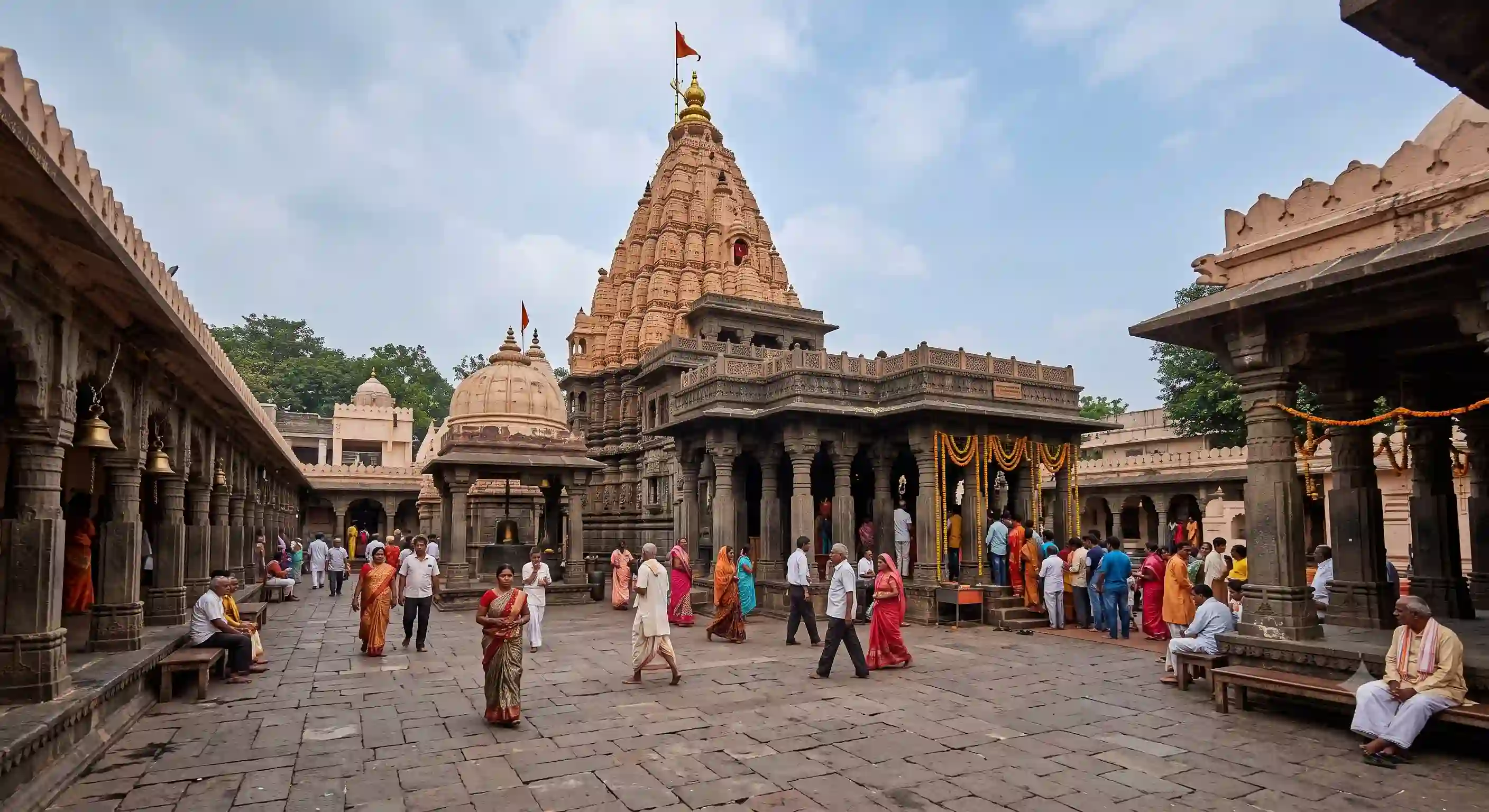
Step into the eternal energy of Ujjain with Sri Mahakaleshwar Jyotirlinga—world-renowned for its sacred Bhasma Aarti and ancient architectural grandeur. A divine sanctuary of peace, rebirth, and spiri
Sources 1
- Major Temples, Tirthas & Dhams of India (Avyani project reference, EN + HI editions, Sep 2026)
Where a tradition is told differently from region to region or from one sampradaya to another, the tellings are given side by side.
Darshan timings, portal dates, registration rules and distances are approximate and change from time to time; please confirm with the official notices of the temple trust or administration before travelling.