


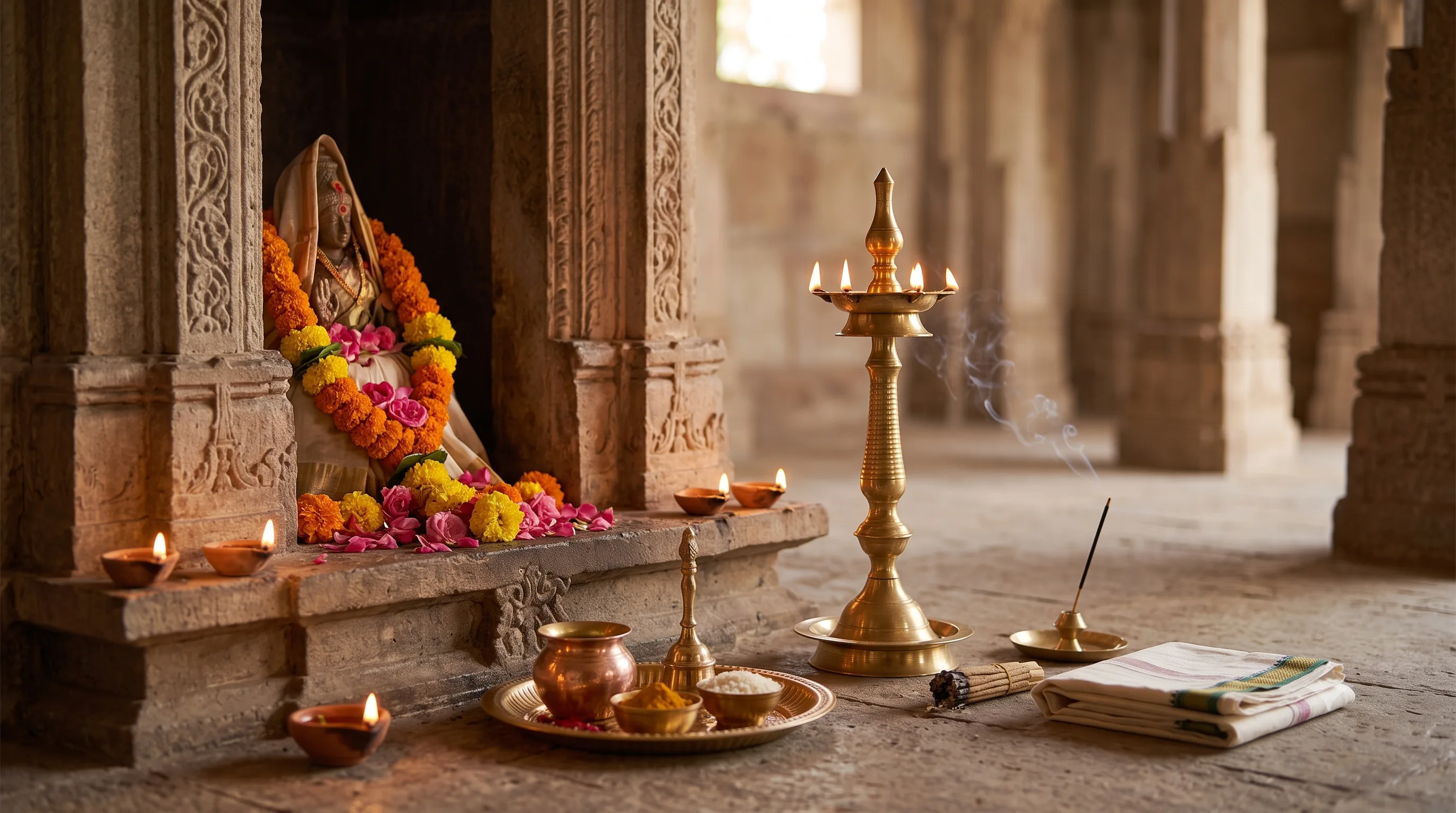
Eighteen temple sevas, the daily and periodic cycle of service through which a temple's presiding deity is cared for, from Suprabhata Seva to Kumbhabhishekam, drawn from Avyani's Master Puja & Ritual Catalogue.
Seva (सेवा) in the temple context refers to the structured cycle of daily and periodic ritual service offered to the presiding deity according to the Agama liturgical calendar — the core operational practice of Hindu temples across India. Avyani's Master Puja & Ritual Catalogue records eighteen distinct temple sevas.
The Daily Cycle
A temple's day typically opens with Suprabhata Seva, the early morning ritual awakening of the deity with devotional hymns, followed by Thomala Seva, the decoration of the deity with fragrant garlands. Nitya Puja Seva describes the full ongoing daily cycle performed by temple priests, closing each stage with Deeparadhana, the ceremonial waving of lit lamps.
Personal and Sponsored Worship
Devotees commonly sponsor individual sevas on their own behalf: Archana, the chanting of a devotee's name and gotra with an offering of flowers, is the most accessible; Ashtottara Shatanamavali Archana extends this to 108 names. Pushpanjali Seva and Panchamrita Abhishekam Seva are similarly sponsored offerings performed as part of a temple's regular seva menu.
Processional and Festival Sevas
Vahana Seva processes the deity's utsava (festival) murti mounted on a specific vehicle form, while Rathotsavam processes the deity through the streets in a large temple chariot — the same tradition behind Jagannath's Rath Yatra, described in our Vishnu Rituals guide. Dolotsavam places the utsava murti on a decorated swing, and Alankaram Seva provides special ornamental decoration for festival or sponsored darshan occasions. Kalyanotsavam, the sponsored ceremonial re-enactment of a deity couple's divine wedding, is among the most popular sevas at temples such as Tirumala.
Community Service Sevas
Annadanam Seva, the sponsorship and distribution of free food to devotees, and Prasada Seva, the preparation and distribution of consecrated food, are considered among the highest-merit sevas precisely because they serve the wider community rather than an individual sponsor alone.
Temple Renovation and Consecration
Kumbhabhishekam, the grand consecration of a newly built or renovated temple typically performed once every twelve years, and the related large-scale Sahasra Kalasabhishekam using a thousand consecrated pots of water, mark the most significant — and rarest — events in a temple's ritual calendar.
Temple Sevas at a Glance
| Ritual | Occasion / Purpose | Typical Duration | Priest Recommended |
|---|---|---|---|
| Suprabhata Seva | Ceremonial awakening of the deity | 20-30 mins | Yes |
| Thomala Seva | Floral adornment of the deity | 30 mins | Yes |
| Archana | Personalised worship & merit | 10-15 mins | Yes |
| Ashtottara Shatanamavali Archana | Comprehensive personalised worship | 30-45 mins | Yes |
| Alankaram Seva | Ceremonial adornment & darshan | 30-60 mins | Yes |
| Deeparadhana | Concluding worship with lamp offering | 10-15 mins | No |
| Kalyanotsavam | Sponsoring the deity's ceremonial wedding | 1-1.5 hours | Yes |
| Dolotsavam | Deity's ceremonial swing service | 30-45 mins | Yes |
| Vahana Seva | Procession on sacred vehicle | 2-3 hours | Yes |
| Rathotsavam | Grand chariot procession | 1 day | Yes |
| Annadanam Seva | Sponsoring free community meals | Ongoing | No |
| Prasada Seva | Distribution of sanctified offerings | Ongoing | No |
| Nitya Puja Seva | Routine temple worship cycle | Ongoing daily cycle | Yes |
| Pushpanjali Seva | Devotional flower offering on behalf of devotee | 15-20 mins | Yes |
| Sahasra Kalasabhishekam | Major purificatory & merit ritual | Full day | Yes |
| Kumbhabhishekam | Re-consecration of the temple after renovation/construction | Multi-day | Yes |
| Panchamrita Abhishekam Seva | Purification, sponsored merit | 30-45 mins | Yes |
| Utsava Murti Procession Seva | Public darshan & blessing | 30-60 mins | Yes |
For the abhishekam substances referenced in several of these sevas, see our Abhishekam and Worship Methods guide.