


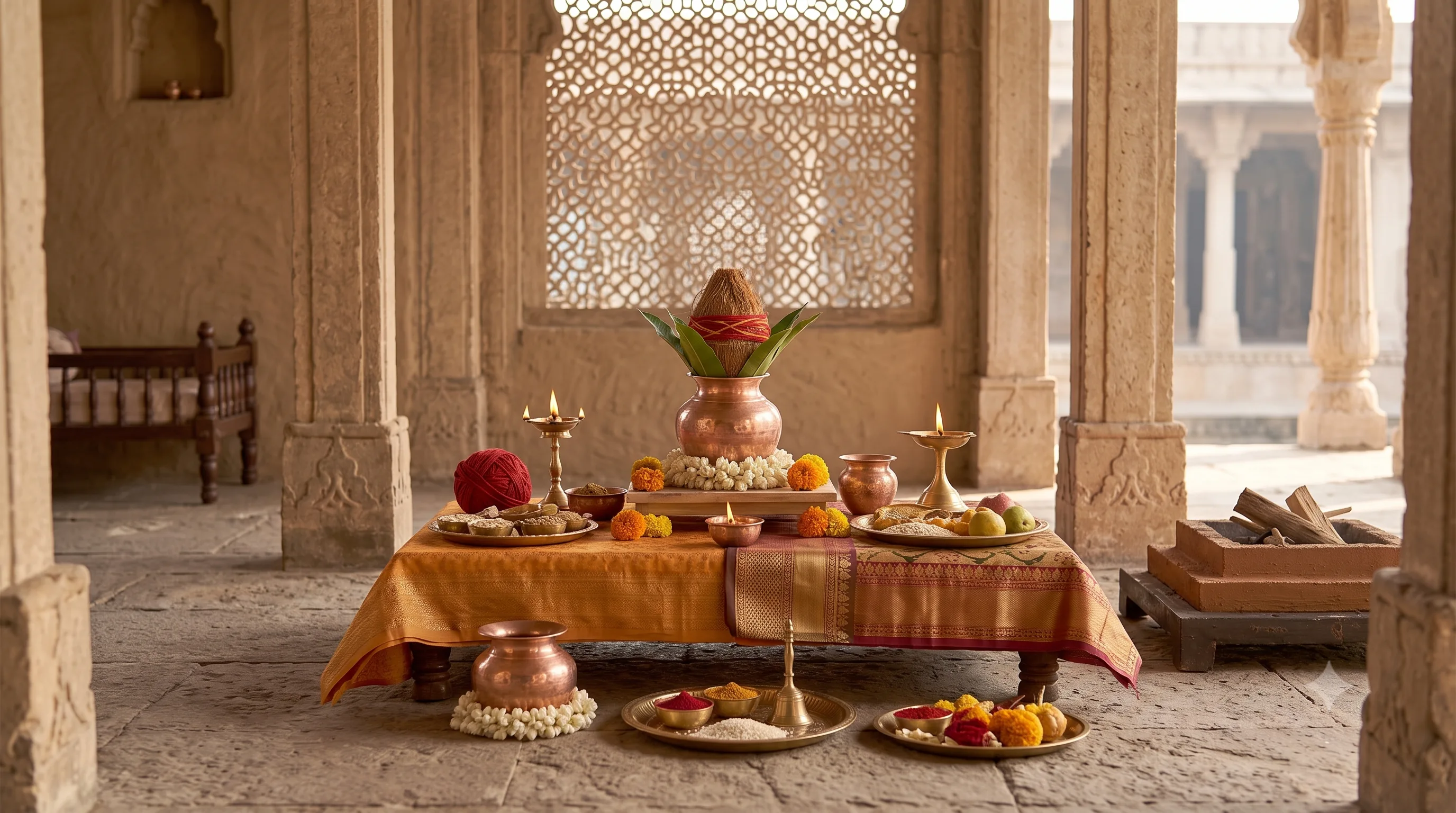
The Shodasha Samskaras — sixteen sacraments marking a person's journey from conception to the final rites — as prescribed in the Dharma Shastras and Grihya Sutras.
The Shodasha Samskaras — the sixteen sacraments — mark a person's journey from conception to the final rites, sanctifying each major transition with ritual, intention and community. They are prescribed in the Dharma Shastras and Grihya Sutras and remain, in adapted form, part of family life across Hindu households today. This overview draws on Avyani's Master Puja & Ritual Catalogue and Master Activity Catalogue.
Before Birth
The sequence begins even before a child is born: Garbhadhana Sanskar sanctifies conception itself, Pumsavana Sanskar is observed in early pregnancy for the health of the unborn child, and Simantonnayana — popularly known today as godh bharai or baby shower — is performed for the wellbeing of mother and child in later pregnancy.
Infancy and Childhood
Jatakarma is performed at or immediately after birth. Namakarana, the formal naming ceremony, typically follows within the first weeks, and Nishkramana marks the infant's first outing into the world. Annaprashana celebrates the first taste of solid food, Chudakarana (Mundan) is the child's first ritual haircut, and Karnavedha is the ear-piercing ceremony observed in many regional traditions.
Education
Vidyarambha marks a child's formal introduction to learning, often with the first tracing of letters. Upanayana — the sacred thread ceremony — is among the most significant samskaras, marking a spiritual second birth and the start of formal Vedic study, which continues through Vedarambha. Samavartana marks the ceremonial completion of a student's Vedic education and their return home, historically preceding the transition to married life.
Adulthood and Beyond
Keshanta, the ceremonial first shave, marks the passage into young adulthood. Vivaha, the marriage samskara, is the most elaborate of the sixteen and is treated in full in our Puja Catalogue's marriage-related entries. Vanaprastha, marking a gradual withdrawal from worldly responsibility, is a traditional later-life stage rarely observed in its original form today. The final samskara, Antyeshti, comprises the cremation and associated rites performed with dignity and care for the departed and their family.
The Sixteen Samskaras at a Glance
| Ritual | Occasion / Purpose | Typical Duration | Priest Recommended |
|---|---|---|---|
| Garbhadhana Sanskar | Sanctifying conception | 30-45 mins | Yes |
| Pumsavana Sanskar | Blessing for healthy foetal development | 30-45 mins | Yes |
| Simantonnayana Sanskar | Wellbeing of mother & child during pregnancy | 1-1.5 hours | Yes |
| Jatakarma Sanskar | Welcoming the newborn | 30-45 mins | Yes |
| Namakarana Sanskar | Formal naming of the child | 1-1.5 hours | Yes |
| Nishkramana Sanskar | First formal outing of the infant | 30 mins | No |
| Annaprashana Sanskar | Introduction of solid food | 1 hour | No |
| Chudakarana Sanskar | First tonsure, removal of birth impurities | 1.5-2 hours | Yes |
| Karnavedha Sanskar | Health & tradition | 30-45 mins | No |
| Vidyarambha Sanskar | Beginning of formal education | 1 hour | Yes |
| Upanayana Sanskar | Initiation into Vedic study & dwija status | 3-4 hours | Yes |
| Vedarambha Sanskar | Formal Vedic education begins | 1-2 hours | Yes |
| Keshanta Sanskar | Marking transition to youth | 1 hour | Yes |
| Samavartana Sanskar | Completion of studentship (Brahmacharya) | 1-2 hours | Yes |
| Vivaha Sanskar | Entry into Grihastha ashrama | 3-4 hours | Yes |
| Vanaprastha Sanskar | Transition to renunciate stage of life | Symbolic/varies | Yes |
| Antyeshti Sanskar | Liberation of the departed soul | 2-4 hours | Yes |
Most samskaras call for a qualified priest familiar with the family's specific tradition and regional custom, since practice varies meaningfully by region and sampradaya. For a simpler, everyday ritual, see our guide to How to Perform a Simple Home Puja.