


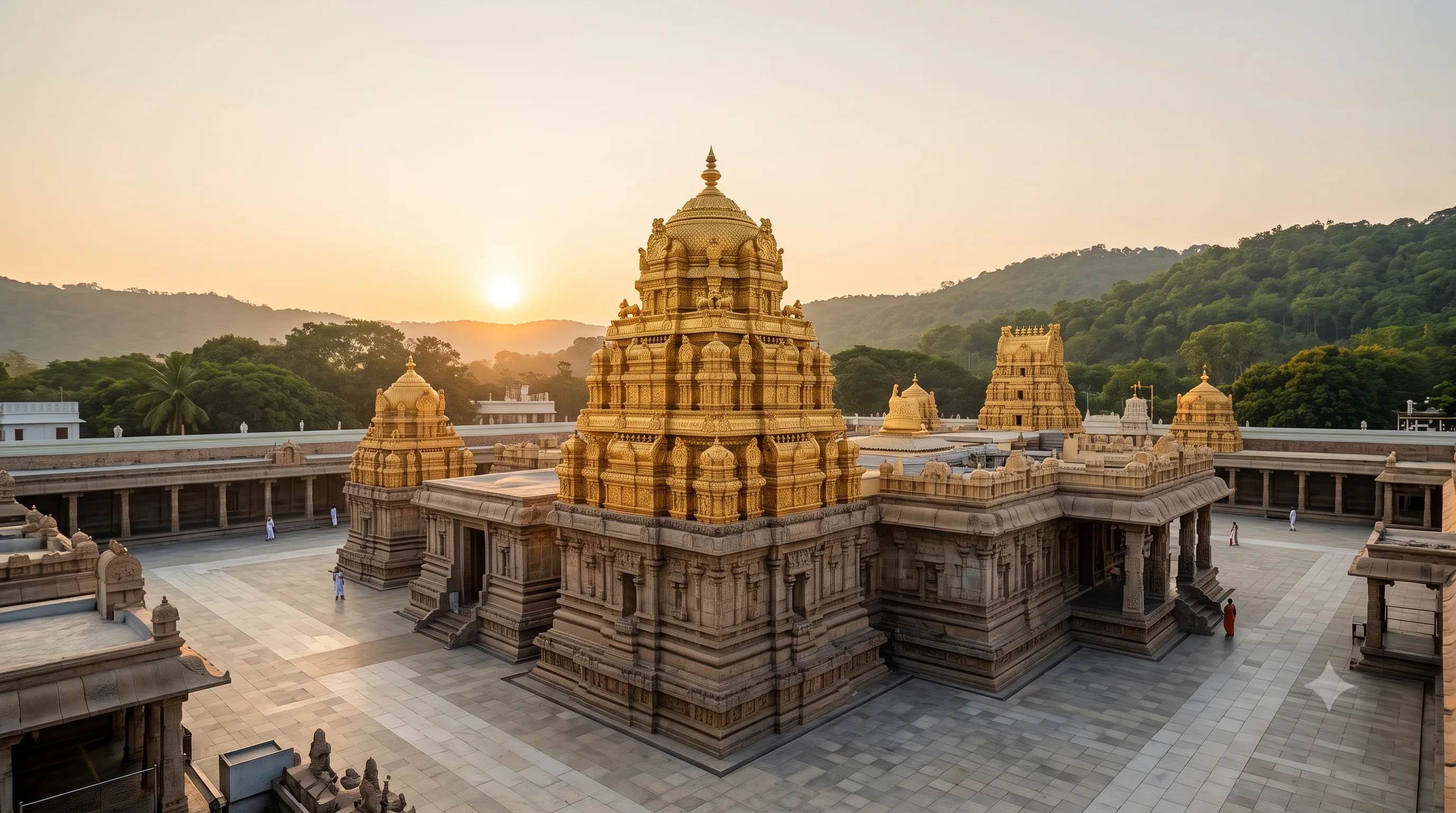
A globally revered temple of Lord Venkateswara in the Tirumala hills of Andhra Pradesh, known for its daily rituals and the devotion of millions of pilgrims each year.
High in the Tirumala hills of Andhra Pradesh stands the temple of Lord Venkateswara, known to devotees across India as Tirupati Balaji or Srinivasa. It is among the most visited places of worship in the world, and one of the central shrines of Sri Vaishnavism, the tradition that reveres Vishnu as the supreme deity.
The Presiding Deity
The presiding deity is Lord Venkateswara, a form of Vishnu, worshipped here alongside his consorts Lakshmi and Padmavathi. Devotees know him by many names — Balaji, Srinivasa, Venkatesha — each reflecting a different aspect of the same devotion.
Spiritual and Scriptural Significance
Tirumala's association with Vishnu appears in Tamil literature as early as the Silappathikaram, traditionally dated to around the 2nd century CE, and the temple holds particular significance within the Sri Vaishnava tradition shaped by the 11th–12th century philosopher-saint Ramanujacharya, closely associated with organising its worship and rituals. A verse from the Sri Venkatesha Mangalasasanam, a traditional hymn of blessing addressed directly to the deity, is widely recited by devotees:
श्रियः कान्ताय कल्याणनिधये निधयेऽर्थिनाम् । श्रीवेङ्कट निवासाय श्रीनिवासाय मङ्गलम् ॥
śriyaḥ kāntāya kalyāṇanidhaye nidhaye 'rthinām, śrīveṅkaṭa nivāsāya śrīnivāsāya maṅgalam
"Auspiciousness to the beloved of Shri (Lakshmi), the treasury of all that is auspicious, the refuge of those who seek — to Srinivasa, who dwells on the Venkata hill, be all auspiciousness." Unlike a scriptural verse, this is a mangalam, a traditional blessing-verse addressed directly to the deity of this temple, and is among the best known of such verses in the Sri Vaishnava tradition.
History
The temple's documented history includes some of the earliest recorded endowments of any South Indian shrine: the Pallava queen Samavai donated jewels and land for its festivals in 966 CE. Its wealth and scale grew substantially under the Vijayanagara Empire — in 1517, Emperor Krishnadevaraya donated gold and jewels that enabled the gilding of the vimana, the tower over the inner sanctum, during one of his several recorded visits. Today the temple is administered by the Tirumala Tirupati Devasthanams (TTD), a statutory trust that has managed its affairs since 1932.
Traditions and Worship
Each day begins with the Suprabhatam, a devotional hymn tradition used to ceremonially wake the deity, followed by a sequence of rituals through the day. Three traditions are especially well known among visiting devotees: the offering of hair through tonsure (mundan), undertaken as a personal vow or act of devotion; the Tirupati laddu, a prasadam sweet with a Geographical Indication (GI) tag since 2009, prepared daily in the temple's own kitchens; and the hundi, where devotees offer money as a direct expression of gratitude. Many of the temple's ceremonial traditions — including Alankaram (deity decoration) and Kalyanotsavam (the ceremonial re-enactment of the deity's wedding) — belong to the wider pattern of temple seva described in our Temple Seva and Temple Festivals and Special Sevas guides, and its worship follows the broader Vaishnava traditions described in our Vishnu Rituals guide.
What a Devotee Should Know Before Visiting
The temple offers several categories of darshan, including the free Sarva Darshan and the paid Special Entry Darshan, with tickets and accommodation bookable through TTD's official channels — it is worth planning well ahead, as wait times can run into many hours during peak season and festivals. Modest, traditional dress is expected, and specific requirements are best confirmed with TTD's current guidance before travelling. The hill town of Tirumala is reached from Tirupati by road, and many pilgrims choose to walk up via the Alipiri or Srivarimettu foot paths as an act of devotion.
Location and Access
The temple is located in the Tirumala hills, part of the Tirupati district of Andhra Pradesh. Tirupati town below is well connected by rail and air, with the hill temple reachable by road, on foot, or by TTD-run transport.