


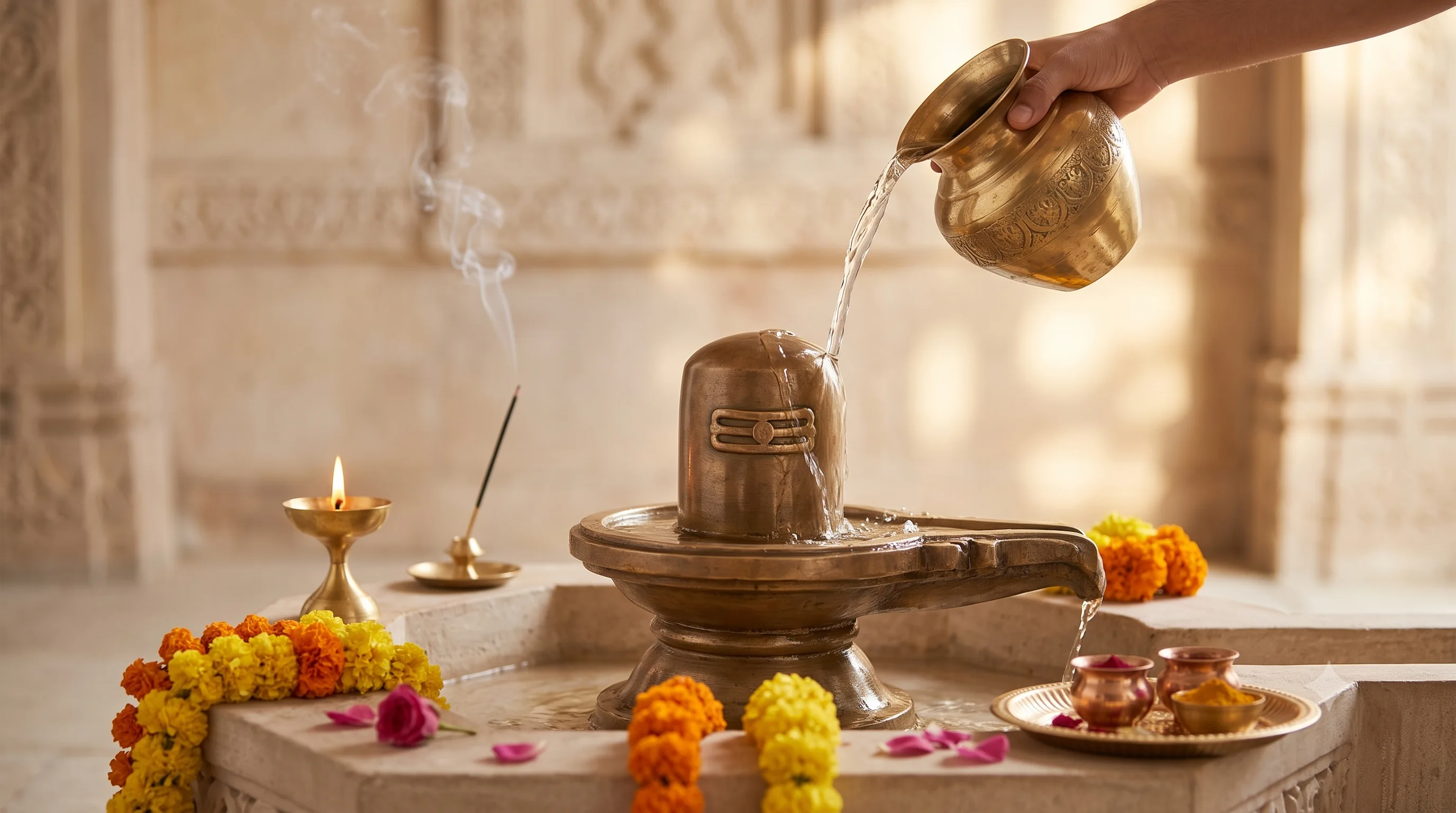
The ritual bathing (abhishekam) offered to a deity's murti or linga, together with the classical Upachara methods that structure worship of any deity, drawn from Avyani's Master Puja & Ritual Catalogue.
Abhishekam (अभिषेकम्) — the ritual bathing of a deity's murti or linga with sacred substances — is a core liturgical practice found across nearly every deity tradition, especially in Agama-based temple worship. Alongside it, Avyani's Master Puja & Ritual Catalogue records a separate category of standardised Upachara (उपचार) worship methods that define how a deity is offered service in the first place. Together these two categories cover 9 and 5 rituals respectively — the underlying methodology behind most of the deity-specific rituals described elsewhere in our Puja Catalogue.
What Abhishekam Substances Represent
Different substances carry different meanings: Jala Abhishekam, bathing with plain or sanctified water, is the simplest and most universal form and needs no priest. Ksheera Abhishekam (milk) and Madhu Abhishekam (honey) symbolise nourishment and sweetness respectively; Panchagavya Abhishekam uses the five sacred cow products together; and Coconut Water Abhishekam is a widely offered, easily available alternative. Kumkumarchana Abhishekam, offering vermillion powder to Devi forms, is a distinctly Shakta variant.
Abhishekam Combined with Recitation
Abhishekam is frequently combined with a specific chant: Ashtottara Abhishekam recites 108 names of the deity while bathing continues, and the more elaborate Sahasranama Abhishekam recites a full thousand names, typically taking two to three hours. Panchamrita Ekadashi Abhishekam pairs the classical five-nectar mixture with the Vishnu-associated Ekadashi observance.
The Upachara Methods
Beneath every formal puja lies a defined sequence of offerings, or upacharas, applicable to any deity: the Panchopachara (five-step) and Shodashopachara (sixteen-step) methods are the most common, with the sixteen-step sequence used for most major festival and temple worship. The Panchayatana Method defines the Smarta approach of worshipping five deities through representative symbols, while the Abhisheka Vidhi and Homa Vidhi define the structural sequence of ritual bathing and Vedic fire ritual respectively — the frameworks that the abhishekam rituals above, and the homams described in our other guides, both follow.
Abhishekam and Worship Methods at a Glance
| Ritual | Occasion / Purpose | Typical Duration | Priest Recommended |
|---|---|---|---|
| Ashtottara Abhishekam | Comprehensive ritual bathing with 108 names | 1-1.5 hours | Yes |
| Sahasranama Abhishekam | Elaborate ritual bathing with 1000 names | 2-3 hours | Yes |
| Ksheera Abhishekam | Purity, devotion, cooling effect | 20-30 mins | Yes |
| Jala Abhishekam | Purification, cooling, devotion | 15-20 mins | No |
| Madhu Abhishekam | Sweetness in life, prosperity | 20-30 mins | Yes |
| Panchagavya Abhishekam | Purification, sanctity | 30-45 mins | Yes |
| Coconut Water Abhishekam | Cooling effect, purity, devotion | 20-30 mins | Yes |
| Kumkumarchana Abhishekam | Prosperity, auspiciousness | 30-45 mins | Yes |
| Panchamrita Ekadashi Abhishekam | Purification, devotion, merit | 30-45 mins | Yes |
| Panchopachara Method | Standard method for simple daily worship | N/A (method) | No |
| Shodashopachara Method | Standard method for elaborate formal worship | N/A (method) | No |
| Panchayatana Method | Standard Smarta method for daily worship | N/A (method) | No |
| Abhisheka Vidhi | Standard method for ceremonial bathing of deity | N/A (method) | No |
| Homa Vidhi | Standard method for conducting a homa/havan | N/A (method) | Yes |
For the specific fire-ritual framework these methods support, see our Havan Samagri guide, and for the everyday application of the Panchopachara method, see How to Perform a Simple Home Puja.