


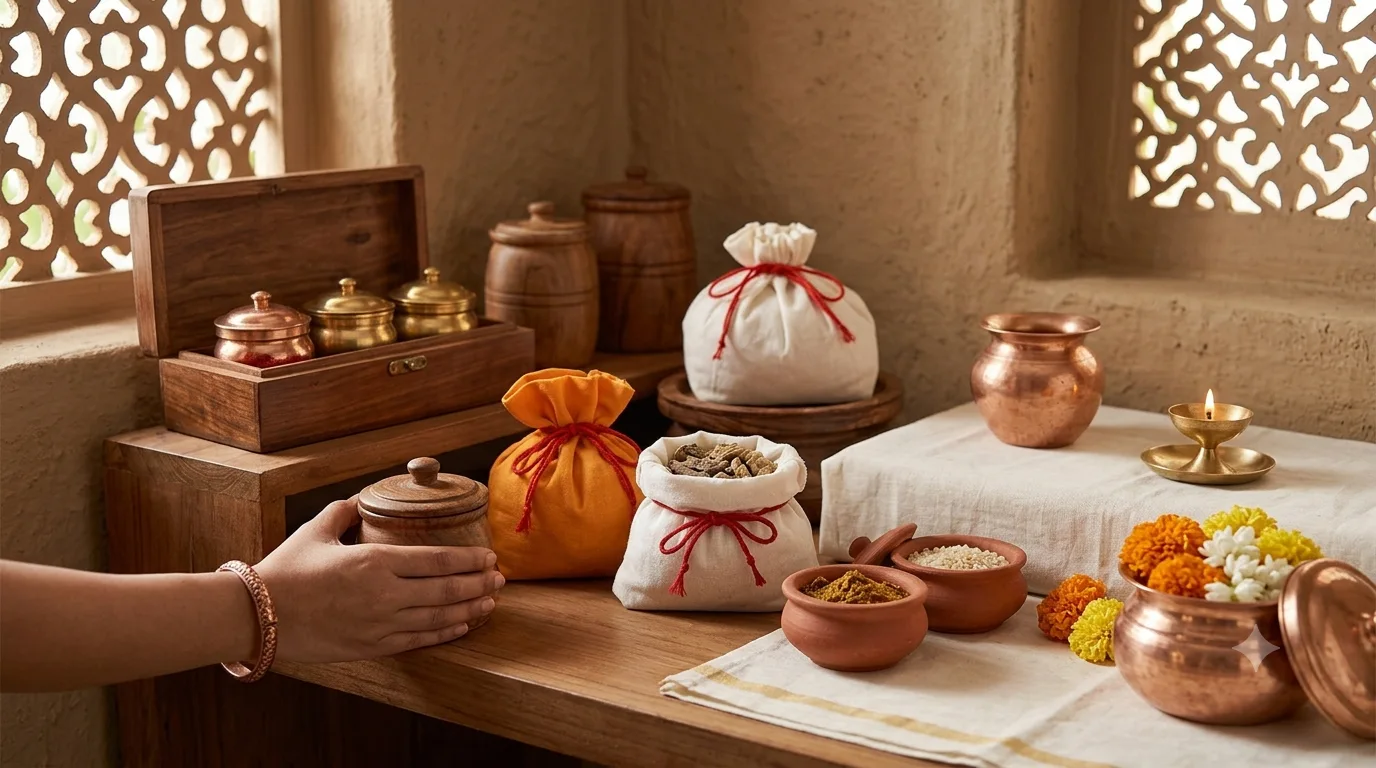
Simple guidance on storing, cleaning and respectfully disposing of puja items so your home altar stays sacred and organised.
Most items used in puja fall into one of two groups: reusable articles that form the permanent tools of worship, and consumable items offered fresh each time. Caring for both with attention is itself a form of respect for the practice.
Reusable Items: Kalash, Deepak, Bells and Idols
Brass and copper items — the kalash, deepak, aarti thali, ghanti and panchpatra — benefit from regular cleaning with a mixture of tamarind or lemon and salt, which restores their shine without harsh chemicals. Dry them fully before storing to prevent tarnish. A conch shell (shankh) should be rinsed with plain water after use and stored dry. Rudraksha and tulsi malas are best kept wrapped in a clean cloth, away from direct sunlight, and are traditionally not shared between people for personal daily use.
Consumable Items: Flowers, Leaves and Naivedya
Flowers, leaves and food offerings are, by design, not meant to be kept indefinitely. Once wilted, flowers and leaves used in worship are traditionally returned to nature — placed at the base of a plant, a garden, or a river — rather than discarded with household waste. Many families keep a small dedicated container for this purpose before disposal. Naivedya that has been offered (prasad) is shared and consumed, not stored for later use, in keeping with the spirit of the offering.
Threads, Cloth and Sacred Marks
A Mauli or Kalawa thread is typically worn until it naturally wears off or is untied on a specific occasion, rather than cut; if it must be removed, it is treated respectfully rather than discarded casually. Cloth items such as a chunri or deity vastra, once used for a murti, are usually not reused for daily wear and are either kept aside for the deity or respectfully disposed of along with other consumable items.
Havan Samagri and Ash
After a havan, the cooled ash (bhasma) is traditionally collected respectfully — some is kept for application as vibhuti, and the remainder is returned to earth or water rather than treated as ordinary waste. Havan kunds and spoon sets should be cleaned once fully cooled and stored dry to prevent rust.
General Storage
Most households keep a dedicated shelf or small cupboard within the puja space for samagri, separating reusable utensils from the stock of flowers, incense, cotton wicks and powders replenished before each use. Keeping mandatory items — akshat, kumkum, a spare thread, matches — readily stocked avoids last-minute substitutions. See our Understanding Samagri guide for what each item is used for, and our Puja Catalogue for the specific materials each ritual calls for.